

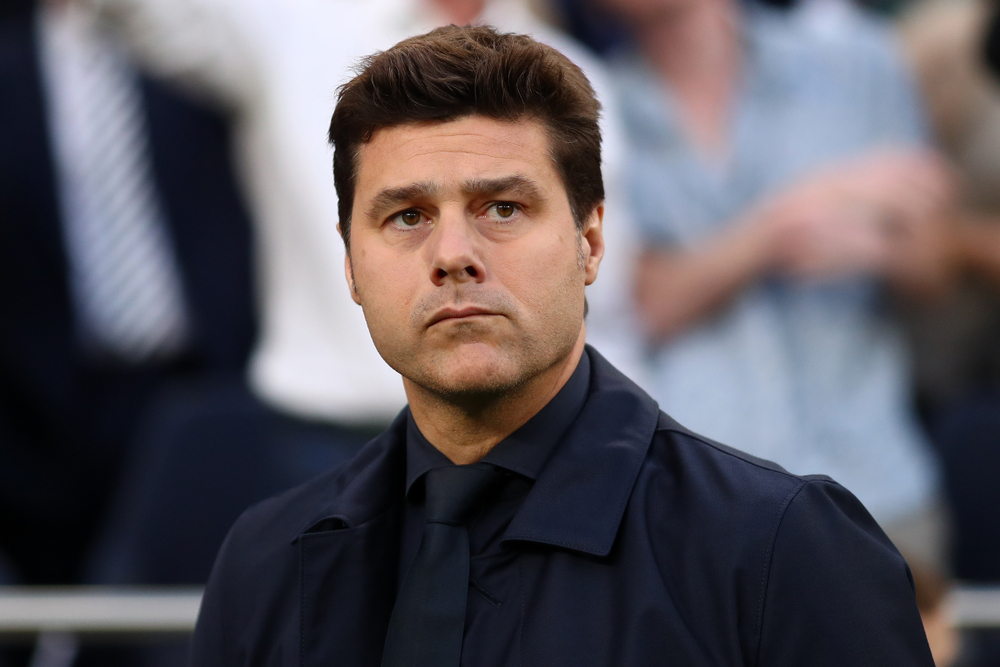
Mauricio Pochettino admits he still misses the Premier League. The former Tottenham and Chelsea boss hopes to return one day. Now in charge of the United States national team, he prepares for the 2026 World Cup with clear ambitions and lingering memories of English football.
Missing the thrill of English football
Pochettino spent years on the touchline in England. He joined Southampton after leaving Espanyol, then moved to Tottenham, where he reached the 2019 Champions League final. Later, he led Chelsea before leaving in 2024.
He told a sports interviewer that the Premier League remains the best competition in the world. “Of course I miss it. I am happy in America but I always think of coming back. It’s the most competitive league,” he said.
Close to glory with Tottenham
Apart from his successful spell at Paris Saint-Germain, where he won Ligue 1 and the French Cup, critics still question his lack of trophies in England. That thought still troubles him. Pochettino guided Tottenham to the Champions League final, the EFL Cup final, and a second-place finish in 2017. “We were so close at Tottenham. We nearly touched it,” he said. “Winning the Premier League or the Champions League remains a dream I want to achieve.”
He still keeps contact with Daniel Levy, the man who dismissed him in 2019. Levy’s departure as executive chairman in 2025 surprised Pochettino. “His legacy is amazing. What he did for Tottenham is incredible,” he said. “My relationship with him was always good, even after I left. He gave me the chance to manage one of the best clubs in the world with incredible fans.”
Leading a new football culture in America
Pochettino took over as United States head coach in September 2024. He faces the challenge of preparing a team that will co-host the 2026 World Cup with Canada and Mexico. Results have been mixed so far. He has won 11 of 20 games but lost to Mexico, Canada, Panama, and South Korea. Critics question his cultural changes and his frustration with home games dominated by away fans.
He admits international management feels very different. “The rhythm is not the same. You prepare for a few days, play, then wait months for the next match,” he said. “You feel empty because you can’t keep improving things after the second game. There’s no daily work like at a club.”
Building belief in American soccer
The United States have reached the World Cup quarter-finals only once, in 2002. But football in the country has grown quickly. Major League Soccer, formed in 1995, now attracts global stars like Lionel Messi. His arrival, Pochettino believes, changed how young Americans view the sport. “Kids used to dream of basketball or baseball. Now they want to play soccer,” he said.
His employers even ask him to use the term “soccer” instead of “football” to avoid confusion with American football. Yet Pochettino insists that the game’s essence remains the same everywhere. “Some coaches tell me to understand the American player’s culture. I say I understand the culture of football. We must translate that to American players,” he said.
One language for football
After one year in charge, Pochettino believes progress is clear. “We are building something important. Football speaks one language,” he said. “It doesn’t matter if you are American, Brazilian, or English. To win, you must compete the right way.”
Would you like me to make the subheadings slightly more creative and magazine-style (e.g., “Back where it all began” or “The American experiment”) while keeping your rules?
