

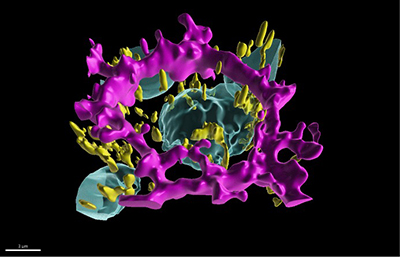
Scientists at the National Institutes of Health have created a digital eye model to improve understanding of vision loss. This innovation focuses on age-related macular degeneration, a major cause of blindness in older adults.
The digital eye model acts like a twin of human eye cells. It allows researchers to simulate how the cells react to different treatments. By using this tool, scientists hope to find new therapies faster than traditional lab methods.
Age-related macular degeneration affects millions of Americans. It gradually destroys central vision, making reading, driving, and daily tasks difficult. Currently, treatment options are limited, and progress in therapy development can be slow.
The NIH team says the digital eye model could change how research is done. It can mimic complex eye cell behaviors, giving scientists a safe and fast way to test potential drugs. The model also reduces reliance on animal testing, which is often costly and time-consuming.
Researchers can manipulate the digital cells to study specific processes that lead to cell damage. This level of detail helps pinpoint exactly how degeneration occurs and which treatments might work best.
Experts believe the digital eye model could speed up the development of therapies that restore or protect vision. By observing cell reactions in a controlled virtual environment, scientists can narrow down promising drug candidates more efficiently.
The model may also help identify early warning signs of macular degeneration. Early detection is key to preventing severe vision loss. The digital approach could complement current screening methods and improve patient outcomes.
This project highlights the growing role of digital technology in medical research. Virtual models like this one allow experimentation without the risks or costs of traditional methods. They also provide data that is reproducible and highly detailed, which strengthens scientific findings.
NIH officials emphasize that while the digital model is a breakthrough, it will not replace clinical trials. Instead, it serves as a powerful tool to accelerate research before human testing begins.
In addition to macular degeneration, the model may be adapted to study other eye diseases. Researchers are exploring ways to simulate glaucoma and diabetic retinopathy. These applications could extend the impact of the digital tool across multiple vision-related conditions.
The digital eye model reflects a broader trend in healthcare. Many labs are now using computer simulations and artificial intelligence to understand complex diseases. These technologies can make research faster, cheaper, and more precise.
By creating a digital twin of eye cells, NIH scientists hope to save time and resources while improving the quality of research. The ultimate goal is to provide patients with better treatments sooner, reducing the burden of vision loss.
This innovation marks an important step toward combining biology with digital modeling. As research continues, it may open new doors in vision science and offer hope to millions at risk of losing sight.
