

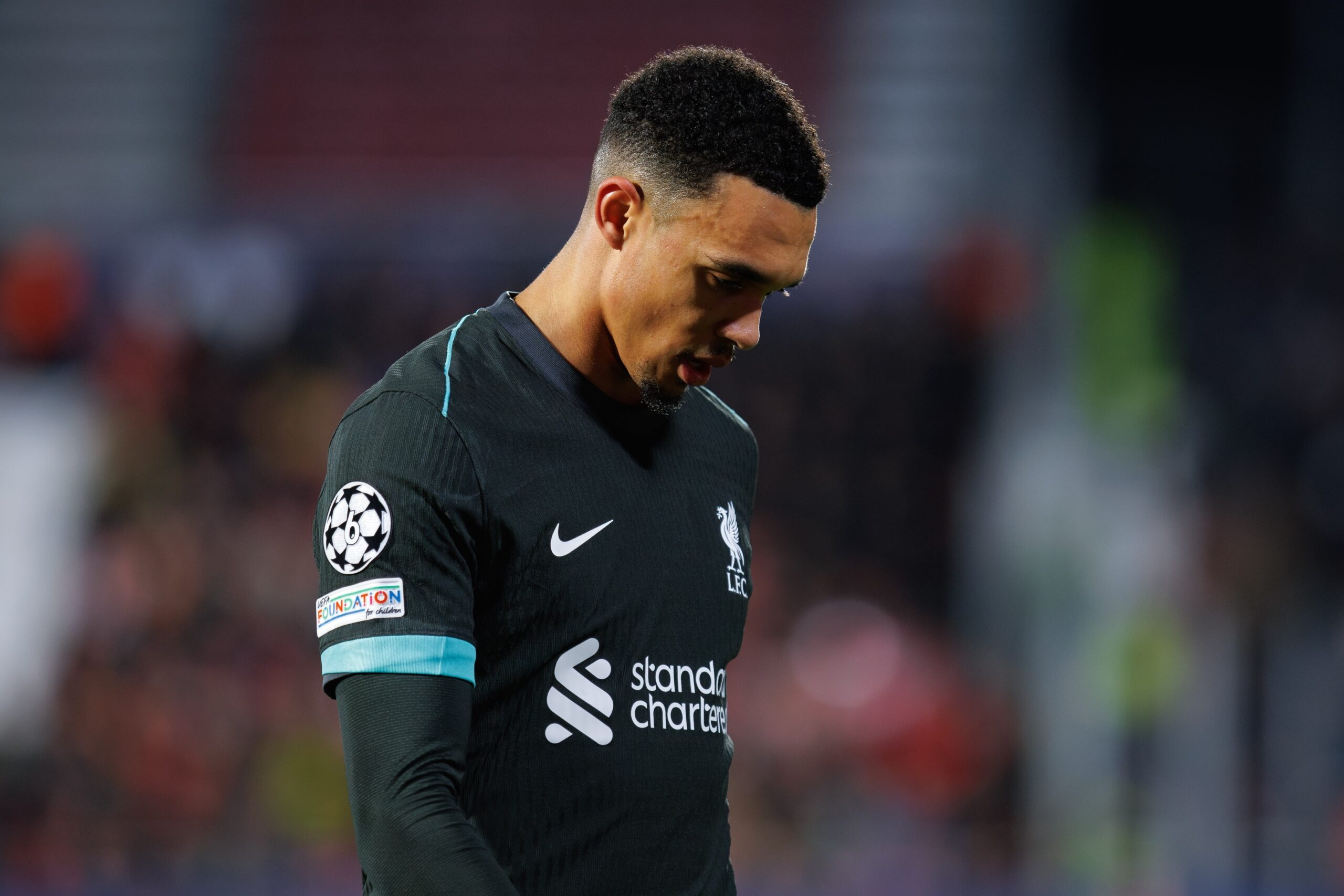
After securing the Premier League title comfortably last season, Liverpool invested heavily to strengthen their squad. Arne Slot’s team spent around £416.2 million on new signings, the highest of any club in the summer transfer window. The arrivals of Alexander Isak, Florian Wirtz, and Hugo Ekitike aimed to elevate Anfield’s attacking options.
Despite sitting third in the table, Liverpool have now suffered three consecutive defeats across all competitions. They host Manchester United on Sunday under growing scrutiny. While new signings require time to integrate, the departure of Trent Alexander-Arnold to Real Madrid has created a gap larger than initially expected.
The 27-year-old right-back contributed 18 goals and 64 assists during his time at Liverpool. Beyond numbers, his influence on the team’s structure and build-up play is deeply missed this season.
Reds struggle against high defensive blocks
The Premier League features some of the world’s best defensive setups, from intense high presses to compact defensive blocks. Teams bypass a high press by playing through it or launching long balls over it. Liverpool, however, have struggled to progress the ball as effectively as last season.
Alexander-Arnold’s technical skill made a significant difference. Against Spurs last season, he faced a high press from Son Heung-min. Angled in-field, he could use his left foot to pass to Alexis Mac Allister, breaking the press with precision. Liverpool often staggered their midfield positioning, allowing short passes to navigate between midfielders and full-backs. These movements created fluidity and allowed the team to advance with minimal touches.
Bradley faces limitations with his weaker foot
In a defeat to Chelsea, Slot fielded Conor Bradley at right-back. He faced similar pressing scenarios to Alexander-Arnold’s against Spurs. Pressed by Alejandro Garnacho, Bradley could not access wide areas effectively. Unlike Trent, Bradley struggles on his weaker foot, forcing him to recycle possession backward to Ibrahima Konate. This restart slows build-up play and exposes Liverpool to repeated defensive challenges.
Wirtz drops deeper than at Leverkusen
Liverpool have adapted to their short build-up issues by deploying Florian Wirtz deeper than at Bayer Leverkusen. At Leverkusen, Wirtz waited on the left flank to receive the ball, but this season he frequently drops into central zones to initiate attacks. This adjustment helps Liverpool move the ball up the pitch but limits Wirtz’s attacking impact in the final third. While practical short-term, the change reduces the midfielder’s ability to exploit his strengths near goal.
Long build-up and switches of play decline
Liverpool’s long passing and switches of play have decreased significantly this season. Last season, the team averaged 3.4 switches per 90 minutes; now they manage just 1.3. Alexander-Arnold’s ability to play crossfield passes with both feet previously forced opponents to shift defensively. Without him, central defenders have less influence on changing the field of play.
Long passing also suffers. Virgil van Dijk still delivers effective diagonals to isolate Mohamed Salah, but other defenders rarely attempt similar passes. Alexander-Arnold averaged 11.3 long passes per 90 minutes with 42.1% accuracy. Bradley and Frimpong manage only 3.7 and 1.1 long passes per 90 minutes, with accuracy of 16.1% and 0%.
Salah plays more often with his back to goal
Liverpool’s attackers struggle without Alexander-Arnold’s influence on build-up play. Isak and Salah excel when attacking at pace and facing defenders in open space. Slower build-ups now force them into crowded, deeper positions. Salah increasingly receives the ball with his back to goal, limiting his options and forcing backward passes under pressure.
How Manchester United can exploit Liverpool
Ruben Amorim’s Manchester United may take advantage of Liverpool’s recent weaknesses. He occasionally instructs his team to defend in a 5-4-1 structure instead of the usual 5-2-3. This deeper formation challenges Liverpool’s central defenders, who are less effective at breaking down stubborn defensive blocks.
Wirtz may be forced further back, limiting his attacking influence. Liverpool’s reluctance to switch play quickly makes penetrating a compact 5-4-1 even harder. United can also limit space for Isak and Salah by pairing tight marking with aggressive support from the left wingback. This strategy could exploit the gaps left by Alexander-Arnold’s departure.
