

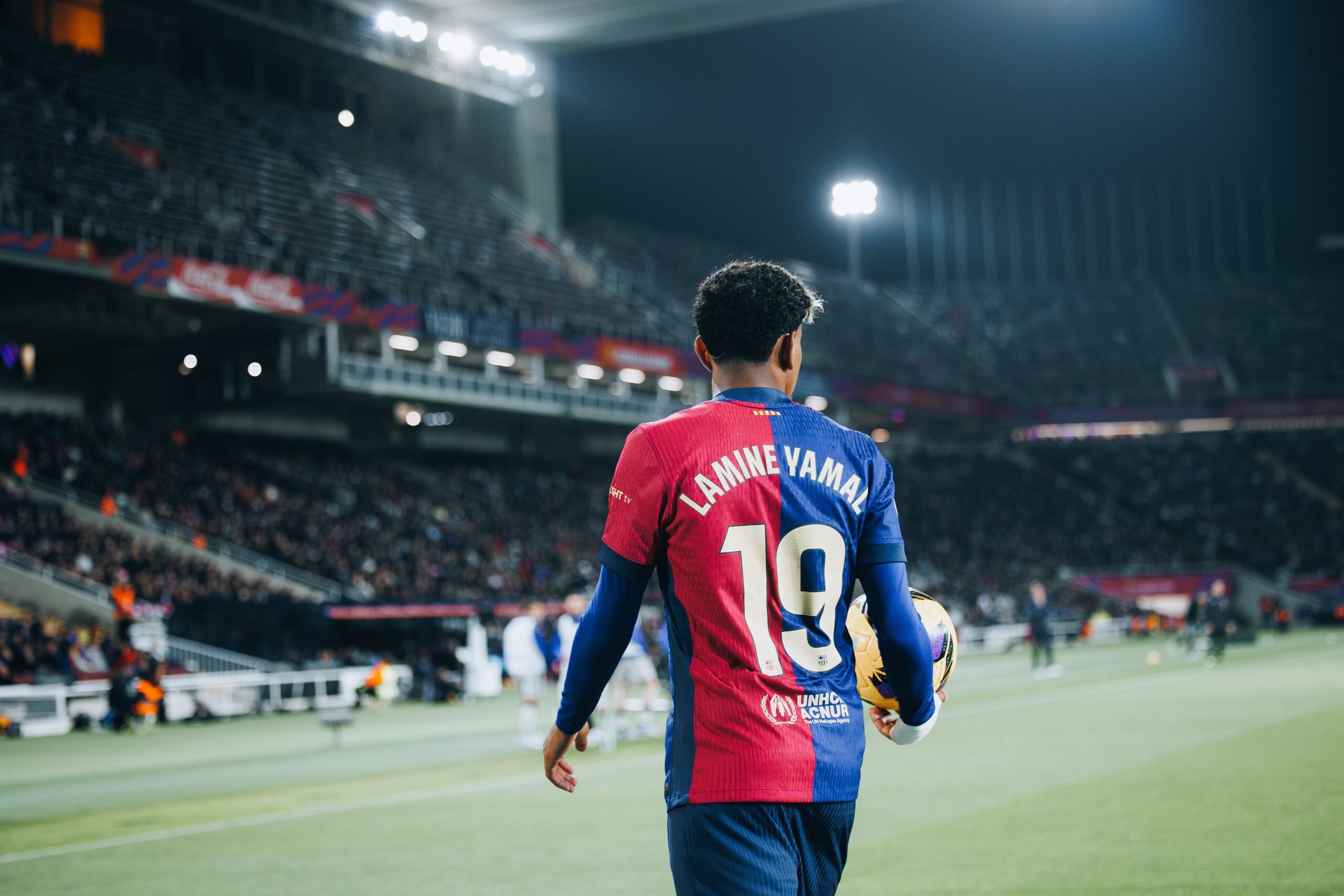
At just 18, Lamine Yamal stands on the edge of football history.
Had he lifted the Ballon d’Or in Paris, he would have become the youngest winner ever. He didn’t—Ousmane Dembele’s collective triumph with PSG proved too strong—but being a candidate at all already marks a revolution. Winning the young player of the year award on Monday confirmed that Yamal is not simply a footballer; he reflects the spirit of his generation.
closer to a pop star than a traditional footballer
For decades, football celebrated sacrifice and humility. Lionel Messi called the Ballon d’Or a “consequence of the team’s work.” Cristiano Ronaldo turned discipline into theatre, sculpting his body into a monument of effort.
Lamine Yamal represents something new. He embodies a youth culture that embraces ambition openly. He has said, “I don’t dream of one Ballon d’Or, I dream of many. If I don’t get them, it will be my fault.” His mindset is neither Messi’s humility nor Ronaldo’s warrior mentality. It is self-ownership, assuming personal responsibility for destiny.
This philosophy resonates with generations Z and Alpha, shaped by crises—financial collapse, pandemic, climate anxiety—and skeptical of institutions. For them, success requires independence, not obedience. Sacrifice no longer holds supreme value; freedom does. Money serves as a tool for autonomy, while fun and visibility become integral to achievement.
Yamal’s summer in Monaco, his gangster-themed birthday party, and moments alongside Neymar are not missteps. They signal that performance alone dictates respect, not conformity. In this sense, he resembles a pop star more than a traditional footballer. He shares a generational space with artists like American singer-songwriter Sombr, who rose from bedroom recordings to worldwide fame through TikTok. His rise depends less on technique than on attitude, presence, and identity, qualities Yamal mirrors on the pitch.
breaking the mould
Social media has accelerated this cultural shift. Messi remained an enigma, Ronaldo a curated rival. Yamal offers immediacy. He shares dances, personal moments, and insights with fans, who feel they know him beyond football.
Young Catalans idolize him not for La Masia’s traditional virtues of discretion and hard work, but for breaking them. Yamal’s charisma, spontaneity, and flashes of genius speak to a global youth reconnecting with football.
having character helps me survive
Yamal’s role is symbolic, but his psychology adds depth. He knows he is a prodigy and embraces responsibility, taking free-kicks, penalties, and wearing Barcelona’s number 10 shirt. “Having character helps me survive,” he says.
Resilience comes from life as well as talent. He grew up in Rocafonda, a working-class neighbourhood of Mataro, the son of Moroccan and Guinean immigrants. His grandmother once crossed the border on a bus, and his mother raised him while working multiple jobs. At 16, he faced the trauma of his father being stabbed. Moving from humble surroundings into La Masia challenged him socially and mentally, forging toughness.
He gives back. His first purchase with football earnings was a house for his mother. “For me, she is my queen,” he says. Fame does not overwhelm him. When his birthday party made headlines, he laughed: “Do you know any 18-year-old who goes out and it’s news?” Criticism fades as long as he performs. His real fear is failing to meet his own ambition.
Football still humbles. He played only eight minutes at the old Nou Camp before its renovation—a reminder of how far he must go. Barcelona proves it can win without him. Marcus Rashford, Pedri, and others carry the team when needed, reducing the burden of expectation.
On the pitch, he evolves. His defensive work, intensity, and duels show growth. Coaches Hansi Flick and Luis de la Fuente shape him into a complete footballer.
redefining what it means to be a star
What comes next? Talent is certain, but Yamal will face setbacks: missing the Ballon d’Or, being benched, injuries, and harsh scrutiny. These challenges test a boy who already carries himself like a man.
We are only at the beginning of his story. Shakespeare wrote that the eve of battle rivals the battle itself in drama and anticipation. Yamal’s career today mirrors that: he is not yet football’s king but walks the stage like one.
If he transforms ambition into endurance and survives inevitable storms, he may create an era. That era could reshape not only Barcelona or Spain, but football itself, redefining what it means to be a 21st-century star.
